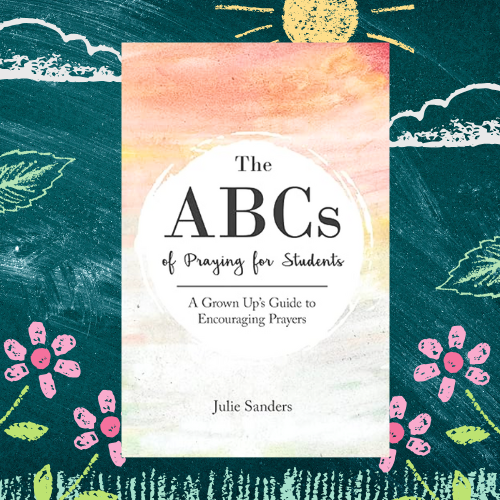
When a parent sends a child off to a school setting outside of their own home, it takes effort to get along with a teacher who isn’t family. After all, an educator of students also has a personality, a life, skills, and opinions of their own. Just as every student is unique, so is every teacher. If we want to help our child thrive by getting along with their classroom or co-op instructor, we can learn the basics of being a parent educator’s are thankful for.
Be ATTENTIVE
Before you and your child step foot into the classroom, the teacher worked on the information you need for a successful year. No doubt, careful thought shaped how much and how fast to deliver what always feels like a lot. Your teacher appreciates knowing you’re working hard to lean in and hear what he or she has worked hard to deliver. They’re held accountable for your attention.
Proverbs 18:13 tells us that, “To answer before listening— that is folly and shame.” Wise people listen when advice is offered (Proverbs 12:15).
Sometimes, it won’t be easy to have another grownup make decisions about and for your child’s days. It may not be easy to hear what another adult has to say about your child, their progress, or their behavior. Conversations may be necessary, and open mindedness will definitely be necessary.
As you pay attention to what they teacher says to you and asks of you, take the humble attitude of willingness to see your child from different angles, through other lenses. The world won’t see our children as we do. Modeling humble attentiveness to a classroom instructor provides a lesson for our watching kids.
Be POSITIVE
When we take those first day of school pictures with a handwritten sign labeling the year, our hearts are full of hope. We may even snap a photo of the new teacher smiling warmly with an arm around our student, making it easy to believe we scored the jackpot with the teacher of the year. But once the first test scores come back and desks get rearranged, our optimism may not take long to wear thin. It wouldn’t be a school year if there weren’t lessons to be learned—by kids and grownups.
We choose the direction of our thoughts. “Finally, brothers and sisters, whatever is true, whatever is noble, whatever is right, whatever is pure, whatever is lovely, whatever is admirable—if anything is excellent or praiseworthy—think about such things.” (Philippians 4:8)
While the finger paint is still damp, decide that you’ll have a positive posture towards your teacher. Choose to think well of the teacher God picked for your child. When things happen that are hard or confusing, take a deep breath and believe the best as you ask questions and keep an open mind.
Be a STUDENT
Every school year is a chance for a parent to be a learner too. We are students of our own children. They keep things interesting by constantly changing. There is no curriculum to rely on. Still, we can be sure the same God who chose us to parent them will give us the wisdom to walk alongside our learners.
We never stop learning.
“Show me your ways, Lord,” a parent can pray, “teach me your paths. Guide me in your truth and teach me, for you are God my Savior, and my hope is in you all day long.” (Psalm 25:4-5)
We need God to show us what we need to know about our kids. He can give us understanding and teach us how to parent them well.
It’s safe to say no parent knows or understands everything about their children. To be a mom or a dad is to enter into lifelong learning about the people God lets us bring into the world. We’ll get along better with their teachers when we choose to view them as a partner. The instructor is someone who can give us another perspective, offer resources, and help us shape the student we steward.
Be a PARENT
More than ever, classroom teachers find students come to school without the benefits of adequate parenting. A lot of kids arrive hungry, tired, and unprepared. Many haven’t learned life skills like following instructions, getting along with peers, cooperating with others, and persevering when things are hard. It’s hard for a teacher to create a stimulating, successful academic setting in school when children are in desperate need of being taken care of.
Who doesn’t want to be the “fun parent?” Kids need moms and dads to be wise and nurturing parents. Hebrews 12:11 reminds us that while it’s not easy to gently train and tenderly discipline our children, it’s ultimately the loving way to raise them.
To get along with the teacher, do your part by being what the instructor isn’t meant to be—the parent. As moms and dads fulfill an all important role in the life of their child, educators are free to focus on teaching. When parents parent and teachers teach, they get along better.
Be PRAYERFUL
Finally, depending on your setting, your child’s teacher may never know this last “be.” To be a praying parent is to enlist the power of God Himself on behalf of your child in the classroom. We could get anxious about the need to get along with the teacher for the good of our child, but God’s word teaches us a better way. It’s the lesson of letting God have the school year and the relationship with the classroom instructor, the school administrator, the bus driver, the counselor, and the other students.
“Do not be anxious about anything, but in every situation, by prayer and petition, with thanksgiving, present your requests to God.” (Philippians 4:6)
By committing to regular prayer about and for our student and about and for our teachers, we shape our own outlook as a parent and the outcomes of our classrooms.
To provide the best experiences, we use technologies like cookies to store and/or access device information. Consenting to these technologies will allow us to process data such as browsing behavior or unique IDs on this site. Not consenting or withdrawing consent, may adversely affect certain features and functions.
Functional
Always active
The technical storage or access is strictly necessary for the legitimate purpose of enabling the use of a specific service explicitly requested by the subscriber or user, or for the sole purpose of carrying out the transmission of a communication over an electronic communications network.
Preferences
The technical storage or access is necessary for the legitimate purpose of storing preferences that are not requested by the subscriber or user.
Statistics
The technical storage or access that is used exclusively for statistical purposes.The technical storage or access that is used exclusively for anonymous statistical purposes. Without a subpoena, voluntary compliance on the part of your Internet Service Provider, or additional records from a third party, information stored or retrieved for this purpose alone cannot usually be used to identify you.
Marketing
The technical storage or access is required to create user profiles to send advertising, or to track the user on a website or across several websites for similar marketing purposes.