
The word INFLUENCER earned a place in the dictionary less than a decade ago. People landed actual jobs under that job title about fifteen years ago when they started exploring how to become an influencer. But it’s not new. Even Roman gladiators used celebrity to market products. The royal family endorsed Wedgewood China in the 18th century. Coco Chanel made her little black dress and Chanel No. 5 famous in the early 1900’s. Mommy bloggers emerged just after 2000 (I jumped in not long after …). Now we follow celebrities, athletes, and social media personalities. Influencer EmilyCC streams her life continuously; she passed the four-year mark of constant chronicling.
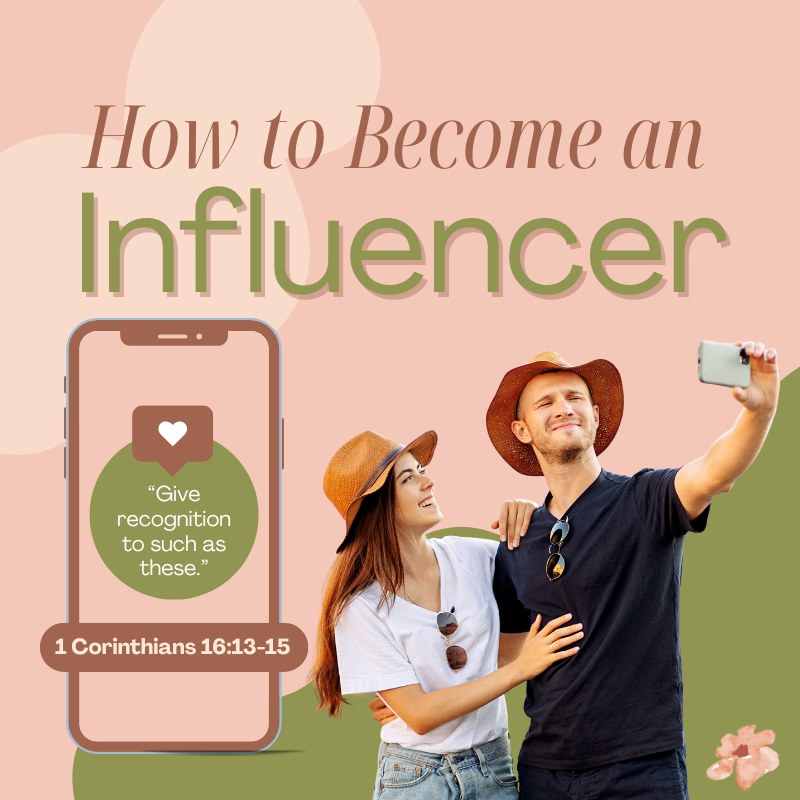
Dictionary.com says people who get the modern-day moniker of “Influencer” will, “typically boast a devoted and engaged following on their social media platform of choice …” I suppose that means gladiators weren’t really influencers.
How Many Influencers?
We have an insatiable desire to be liked— followed. No generation or time in history has a corner on that market, but technology and social media makes it easier than ever to build a personality profile and a fan base out of filtered messages and images. The media tools moved faster than our wisdom to discern how to use it. In fact, Instagram has over 64 million accounts categorized as “influencers.” In late 2024, 12 million people worked full-time as “paid content creators” in the United States. It seems that humans can’t help ourselves when it comes to loving to be loved.
If influencers have “devoted followers,” do you want to be one? Would you like for an influential person to tell others to give you recognition?
Gladiators, the Queen, Coco, Mommies, and Emily all followed patterns of influence. But I came across the real story of How to Become an Influencer, and it’s too good to keep to myself.
At the end of the first letter the Apostle Paul wrote to friends in the city of Corinth, he wraps up with a section usually titled “Final Instructions.” —The last word. Words not to ignore. He presents a challenge, an example, and then goodbyes.
The example lays out 3 keys in How to Become an Influencer.
The CHALLENGE
Paul leaves a straight, simple challenge for his friends. “Be on your guard; stand firm in the faith; be courageous; be strong. Do everything in love,” (1 Corinthians 16:13-14). Watch out. Stand firm. Be brave. Live strong. Always—love.
That’s a wrap!
The EXAMPLE
An example makes it clear how the challenge looks when lived out in life. In fact, Paul wanted to be sure his readers absorbed the pattern of how to be an influencer. You’re probably already having an influence on someone around you. Is it happening in your home, your work, your community, your social media accounts, or your church? We all leave a mark where we live. Paul gets specific by describing a man and his family. An influencer makes influencers by sharing an example of an influencer.
“The household of Stephanas” in Achaia refers to a whole family. Not just any family. They weren’t known for lions they killed, tables they set, or perfume they mixed. Stephanas and his family practiced three actions qualifying them for the category of early influencers.
Influencers Believe Truth
In the province of Achaia, which included most of Greece, these folks were the first to believe in Jesus and follow him. We could assume they had conviction, guts, passion, and initiative. They changed from the worldly ways of the culture they lived in, which had a reputation for being a morally corrupt place. As a family, they made a life-changing decision to believe truth, and as a result, they were changed people.
Influencers Serve People
Like today’s influencers, this family put their belief into action in how they approached people. Unlike today’s influencers who gather others for themselves, they “devoted themselves to the service of” others. That means they showed hospitality, gave of their resources, and generally supported and strengthened other people. We all need friends like this.
- The world’s influencers seek devoted followers.
- Influencers are devoted followers.
Ultimately, life-altering devotion to God meant Stephanas’ family served people. They did this instead of accumulating servers and benefits of their own.
Influencers Love Others
Paul talks about how a visit from Stephanas refreshed him. Stephanas took two others, and together, the refreshers lifted up Paul by spending time with him. In turn, Paul refreshed his readers—us. The influence of Stephanas flowed through his loving, relational approach to others. He and his family were focused people, making life-giving deposits into loving the friends and family around them.
In the end, Paul said, “Give recognition to such as these,” referring to Stephanas and his household—his family. I expect this family’s example drew people to them. They certainly had an influence then, as now. They probably even had “followers,” but the difference is who benefited from the following. If people follow us, may we use that influence to point them to truth, to serve them well, and to love them.
These influencers didn’t use people to benefit their platform—they used their platform to bless people. This is the real story of How to Be an Influencer and the clear path for how to be one. (Read the 4 verses here)
- Make a life-changing decision to believe in what and who is true.
- Practice life-altering devotion to serve people, rather than accumulating personal followers.
- Pour out life-giving deposits to love others, focusing on relationships.
“Give recognition to such as these.” Yes—this is how to be an influencer.